Sunday, September 25, 2011

Here we are now, entertain us

Everyone seems to be dragging their old Nirvana cds out--or dropping the $61.46 for the 4-lp deluxe edition of Nevermind now available as a pre-order online. (Nirvana's Nevermind 20th Anniversary Celebrated with Deluxe Reissue Box Set) I must admit I'm tempted. As a cultural phenomenon, Nirvana made its precipitous rise and drug- and fame-addled implosion during a moment of what was essentially the co-optation and mass-marketing of underground rock culture. Not a new trend in the early '90s, surely, but one that had rarely reached the same pitch, at least for a generation or so. For those of us who remember it (which puts us over 30), it's simply too tempting to capitulate to this moment of nostalgia. Forget about the marketing of "grunge" (whatever that was). Forget about the 14 year-olds in Nirvana t-shirts who couldn't possibly remember "the year punk broke" and its cultural aftermath. Listening to these songs at a distance of twenty years makes me blush as I remember how formative this culture was for me at a certain very impressionable age. It also makes me realize, as someone who still cares about rock and roll, how good this music actually was--for what it was, peculiarly good pop culture.


With time to kill in London, I recently wandered into the Nirvana exhibition in Brick Lane. (Nirvana exhibition). The exhibition displayed the usual memorabilia--photos, album cover artwork, Kurt Cobain's hoodie (there actually could have been more material, if anything). Gravitating toward the audiovisual setup at the back of the exhibition space, I found myself spending more time before the screen watching live footage of the band than I'd anticipated I would--genuinely enjoying the music, and not only from a nostalgic standpoint. Ok, I thought, this is an important moment to re-examine.

I recently picked up Joshua Clover's 1989: Bob Dylan Didn't Have This to Sing about, which had been on my reading list for some time. 


The book is at times deeply interesting, and at others annoyingly insistent about the cultural and historical value of ephemeral mass culture, a problem often encountered by cultural studies. While virtually anyone would agree that pop music registers, accounts for, and sometimes conditions social change, 1989 takes its wager one step further to read retrospectively onto messy and incoherent pop cultural trends the stable ideologies of fully forged cultural formations. The chapter on gangsta, in which "the criminalization of rap returns as the rap of criminalization," and the one on grunge are surely the book's smartest. (These also treat the music that has held up the best aesthetically: who cares about Jesus Jones, The Scorpions, or George Michael?)

The chapter on grunge--which borrows its title from Nirvana's excellent early song "Negative Creep"--suffers acutely from the same tendency to over-read as the rest of the book: Clover assumes grunge was a stable ideological construct, rather than a series of feints by over-exposed twentysomethings, or worse, a sequence of suggessful marketing gestures coalescing around certain subcultural styles. (Did anyone actually embrace the label "grunge"?)  Yet for all its faults, the chapter scores some excellent points in the ongoing cultural reexamination of punk's uneven cultural intervention. In particular, I think, Clover is correct in seeing punk's musical ham-fistedness ("here are three chords, now start a band") as a sort of rejection of bourgeois proficiency and the professionalization of culture. The logic of the amateur converts consumers into producers, virtually any suburban kid into a potential rock star. Clover is also correct in seeing Nirvana's contribution to this lineage as an inversion of punk's critique, as "punk rock turned outside in, not anti-social but a-social," a kind of self-loathing angst aimed back at society. Yet to talk about "grunge"--and Nirvana in particular--seriously may well be to take too seriously Cobain's lyrics, smart as they may sometimes be, and to read into them a politics that simply isn't there. One other fault one could find with Clover's work is his conversion of early '90s rock subculture to a sort of boys-only club: he invokes and dismisses Riot Grrl--one of the era's most coherent moments, not to mention one of its most interesting politically and aesthetically, in a single paragraph.

Perhaps, though, my real complaint is that the work of Clover and other cultural critics like him misses a point that is both mundane and entirely relevant: this is music I liked, and do like.

Thursday, June 9, 2011

Congressional Chest-Man

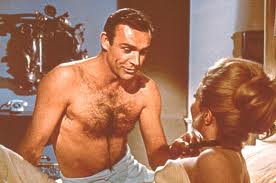
Amid the shitstorm surrounding congressman Anthony Weiner's overexposed chest, I began to marvel... not at the utter stupidity of it all (which boggles the mind) but at how smooth-chested the congressman is:


And then I began to wonder: whatever happened to good, old-fashioned masculinity?


Monday, May 30, 2011

A Benediction from Thurston Moore

Here's the "official" video T. M. released:


And here's a good one a fan made:


There's an interesting continuity between the two. Weird imagery of war and destruction as counterpoint to a song that may be a little too harmonious for the likes of T. M. otherwise. The soundtrack to my late spring/early summer: Thurston Moore's two new albums--the more properly "pop" album "Demolished Thoughts" (Matador; produced by Beck), on which "Benediction" appears and the more experimental, more dissonant "Solo Acoustic Vol. 5/12 String Meditations for Jack Rose" (Vin du Select Qualitite). The second one in particular really impressed me--a little repetitive but great--definitely in a league with Jim O'Rourke's last one "The Visitor." T. M.'s tribute to Jack Rose--like O'Rourke's apparent paean to John Fahey--is the kind of thing that can give itself up to passive background listening and also sustain the most intensive engagement. This recording also brought my attention to Vin du Select Qualitite's project of presenting limited-pressing vinyl of solo acoustic recordings well worth checking out: http://www.vdsqrecords.com/

Saturday, May 28, 2011

The Uneasy Alliance of Political Reform and the Free Market in the Arab World

With the Group of 8's pledge of billions in aid to fledgling democracies in Egypt and Tunisia, democracy is once again being yoked to the free market--as if the one could not exist without the other. Yet democracy--with its rhetoric of equality and popular participation--and liberalism--with its recourse to individual rights and liberties--may, if we take each of these ideals to its extreme, cancel each other out. If I am "free" to pursue my own economic interests unhindered by state intervention, I am also free to exploit you unfettered should you possess a resource that might contribute to my own pursuit of economic development.

Liberal democracy's imagining of a human in the abstract bereft of any specificity, not to mention its human rights-based discourse, has certainly opened it up to criticism from the left. Such an unspecified insistence on the centrality of human rights remains open to a bland leveling effect, rendering it unanswerable to a specific politics of critique and therefore manipulable by hegemonic powers. Yet, flawed as it may be, a politics rooted in a language of human rights must still be the basis of any effective realpolitik when it comes to emerging democracies in the Arab world. The West should therefore provide its aid, but with no strings attached, and no hidden agenda of liberalizing new markets.

Friday, May 27, 2011

Godard's latest: Film Soicalisme (2010)


Haven't had a chance to see this yet but can't wait. The likes of Patti Smith and Alain Badiou in the same film(!)

Godard's '68 Generation Maoist politics were increasingly on display in films like Tout Va Bien (1972) in ways that can ring a little shrill from the standpoint of the present. While the generally anti-imperialist political valences of Notre Musique (2004) lay just beneath the surface, its critique is more subtle, more nuanced if less coherent. But who wants art that explicitly polemicizes, a move that puts even the most progressive artworks at risk of becoming "cryptograms of domination," to use Adorno's phrase? In its least coherent moments, though, Notre Musique risks becoming not a little exploitative in that Western-appropriation-of-the-Other kind of way, reducing, say, the political history of the U.S. genocide of Native Americans (yes, I called it a genocide) and the struggles of Bosnian Muslims to more or less equivalent terms. So what exactly is the nature of Godard's ongoing engagement with socialism?

Tout Va Bien


Notre Musique

To complicate matters, here's a short exchange Harper's ran recently in its always edifying "Readings" section between Godard's PR person and a would-be devotee:


Le petit sold-out

From emails exchanged on August 27 about an unauthorized screening of Jean-Luc Godard’s Film Socialisme scheduled for that evening at the New York City activist art organization 16 Beaver Group in collaboration with the film collective Red Channels. On August 23, Scott Foundas, an organizer of the New York Film Festival, which was hosting the film’s official U.S. premiere, demanded that the 16 Beaver screening be canceled and notified the film’s international distributor, Wild Bunch. Vincent Maraval is a producer as well as a sales agent for Wild Bunch.
Dear Scott,
As a co-organizer of 16 Beaver Group, I was forwarded your recent emails. I have to say I was alarmed by the arrogant and legalistic tone of your email. At screenings like this we are invested in having a productive and in-depth discussion that takes seriously cinema as a political project—the kind of treatment for which Film Socialisme seems to call.
We had no idea that Film Socialisme was considered a commercial project. We had planned a screening before your lineup was announced. We planned to screen a digital file, for free, which has been made available (not through us) for free for some months now. It was my impression that this mode of circulation had been encouraged by the filmmaker. Given our cultural cachet among a younger set of filmgoers, such a screening would facilitate a renewed interest in the recent work of the Great Master, perhaps making Godard cool and relevant again. I would suggest that were you in a different mood about this matter, the NYFF and Wild Bunch should be thanking us for providing this free service. Our screening has been canceled, but since you have demanded proof, we request that you, Scott Foundas, come to 16 Beaver to discuss why the screening cannot take place. Within this discussion, we would hope to hear a specific application of intellectual-property law to Film Socialisme, perhaps even a close reading of the final scene. I imagine you’ve seen it? The last lines of the film fading in over an FBI copyright warning, quand la loi n’est pas juste, passe avant la loi . . . no comment.
We would also be interested in hearing about different modes of writing about film—how does one go from film criticism to legal threats, and what does that feel like? We have been holding talks and discussions for many years about the cultural dimensions of economic neoliberalism. These questions of institution and professionalization are of great interest to us. We would like to hold this event, “Socialisme Will Not Take Place,” sometime prior to the festival.
Best Regards,
Benj Gerdes
Dear Sir,
The problem is that you seem considering that films belong to you and you ignore the copyrights. For films to be made, we need money and against money copyrights. Jean-Luc never encouraged his films to be seen for free. He never encouraged piracy. Jean-Luc just says that we should not pay rights for using footages of other films because while authors have rights they also have obligations, obligations to make available their footages for other artists. I know by heart the position of people like you, which is to deny property for your personal use but you big generosity to make GODARD relevant stops when it comes to remunerate the author himself. Quentin TARANTINO called his company A BAND APART in tribute to GODARD. A journalist asked GODARD what he was thinking about TARANTINO admiration and he replied, “I don’t give a shit, I would prefer him to give me money,” but of course he let him call his company that way without asking for anything.
So, we thank you for your attempt to “make GODARD relevant” but we work on that since many years now with the support of national distributors worldwide and festivals that bring us advertisement and high-profile screenings, and I even have the feeling that the announcement of his career OSCAR for next November has nothing to do with the announcement of your screening through a “file made available.” I would have liked to come to explain to your viewers what piracy is and comment on your political statement that makes everything available for free because quand la loi est injuste, la justice passe avant la loi but I can’t be there as I will be in Venice and Toronto trying to exploit and run a commercial operation. I hope we can find you a better material than a file next year and screen FILM SOCIALISME to your friends and debate about the possibility of leaving with your projector and your TV screen.
Best Regards,
Vincent Maraval

Wednesday, May 25, 2011